
AutonomyLab Logo AutonomyLab Contact Us
Contact Us

Reinforcement Learning for Autonomous Vehicle Testing

Explore self-driving simulation research and practical testing methodologies

Featured Articles

In-depth guides from Winnipeg research centers and beyond

Autonomous vehicle simulation environment showing digital road network with sensor data overlays and trajectory planning visualization

Deep Q-Learning for Adaptive Driving Behavior

Learn how deep Q-networks train autonomous agents to make real-time driving decisions in complex traffic scenarios.

12 min Intermediate July 2026
Read More
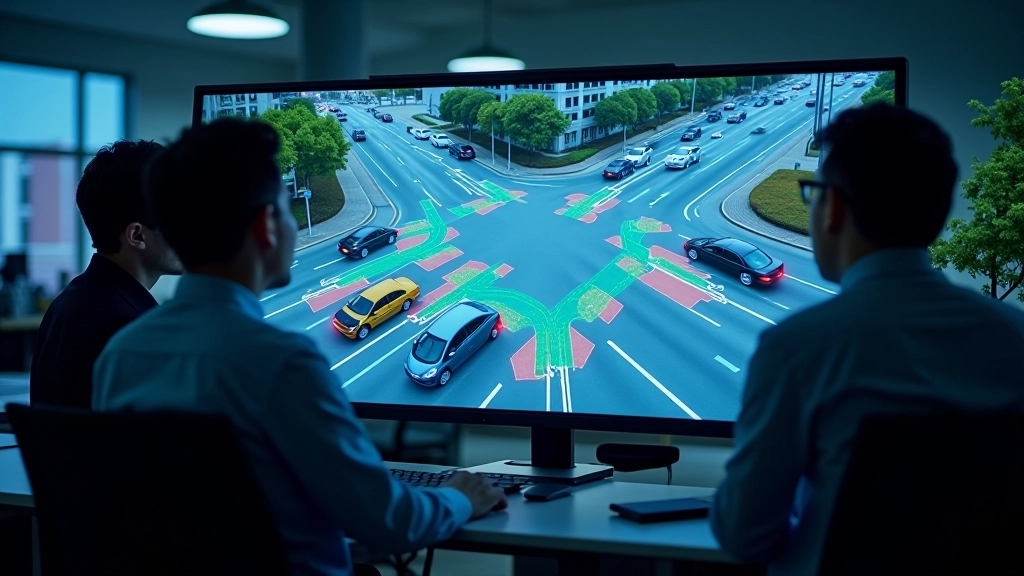
Simulation environment showing multiple autonomous vehicles navigating intersection with real-time decision-making visualization and traffic flow analysis

Multi-Agent Reinforcement Learning in Urban Traffic

Understand how multiple vehicles coordinate using multi-agent RL to optimize traffic flow and safety in dense urban environments.

15 min Advanced July 2026
Read More
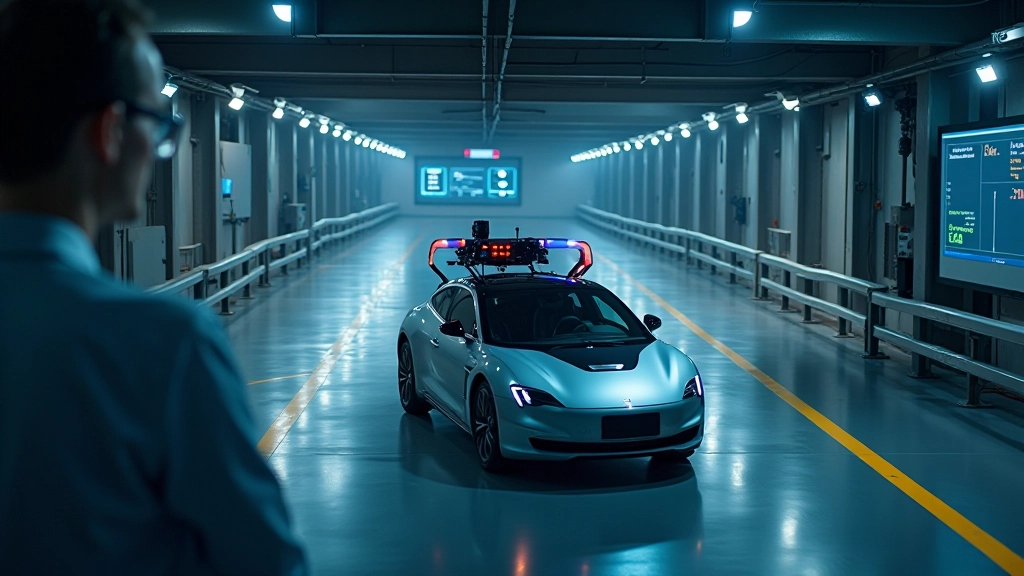
Vehicle safety testing framework with collision detection systems and emergency braking scenario simulation in controlled test environment

Safety Testing Frameworks for Autonomous Systems

Explore validation methodologies and safety benchmarks used to certify autonomous vehicles before real-world deployment.

10 min Beginner June 2026
Read More
Policy gradient algorithms visualization showing neural network architecture for autonomous vehicle decision-making and reward optimization

Policy Gradient Methods for Continuous Control

Discover how actor-critic methods and policy gradients enable smooth steering and acceleration decisions in autonomous driving.

14 min Advanced June 2026
Read More

How RL Testing Works

A practical look at the development pipeline for autonomous systems

1

Environment Setup

Create realistic simulation environments that mirror real-world driving scenarios. This includes road networks, weather conditions, and traffic patterns that the agent needs to navigate.

2

Agent Training

Train the RL agent using reward signals that encourage safe, efficient driving. The agent learns through millions of simulation episodes, refining its decision-making policy.

3

Validation Testing

Test the trained agent against unseen scenarios and edge cases. This phase identifies weaknesses and ensures the policy generalizes well beyond the training environment.

Key Research Areas

Winnipeg researchers are advancing these critical topics

Neural Network Interpretability

Understanding how deep networks make driving decisions. We're developing methods to interpret what the agent learns and why it chooses specific actions.

Adversarial Robustness

Testing vehicle responses to edge cases and adversarial scenarios. This research ensures autonomous systems remain safe even under unexpected or challenging conditions.

Sim-to-Real Transfer

Bridging the gap between simulation and real-world performance. Our work focuses on making agents trained in simulation effective when deployed on actual vehicles.